

Communication: Scenes from a Neurodiverse Marriage

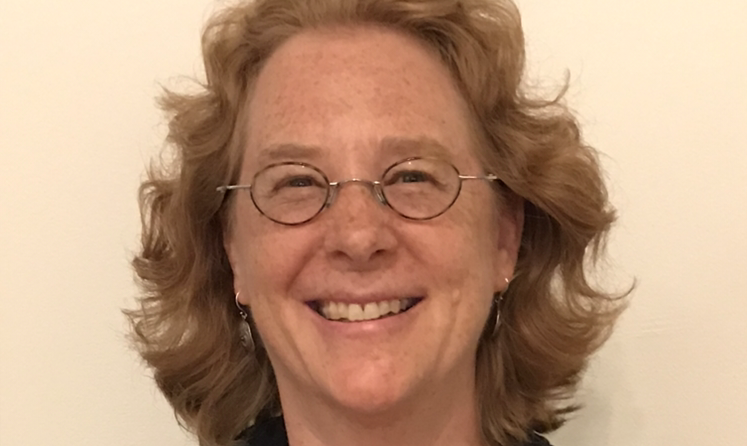
Maggie Bowlby, M.Ed.
About the Author
Maggie Bowlby, M.Ed, is the assistant director of Individual & Family Services at AANE and has been at AANE since 2020. Maggie spent 8 years as a special educator in Massachusetts. She is passionate about amplifying Autistic voices and promoting neurodiversity affirming practices across contexts.

“Can you please put the baby in the yellow Winnie the Pooh polo shirt, with the Winnie the Pooh pants and sweatshirt?” I say to my husband, Alex, with a very specific image of the final outfit in mind. To my chagrin, my ADHD brain had forgotten that my very adorable baby actually has two pairs of Winnie the Pooh sweatpants and two Winnie the Pooh pants. The outfit is not what I envisioned, and I feel frustration washing over me. I know it’s not my husband’s fault, he did EXACTLY what I said, and unfortunately, we cannot yet telepathically communicate. Luckily, the baby still looks very cute in his Winnie the Pooh outfit, and I let it go.
“I’m turning into a pumpkin,” Alex says. I understand our shorthand; he’s overwhelmed and would like to leave. I reply, “You can head out to the car, I just need to say goodbye to a couple of people.” Alex breathes a sigh of relief and heads out.
We’re stopped at a restaurant on a road trip, and our meal is winding down. “They have ice cream here,” says my Alex. “Of course they do!” I reply. At the end of dinner, we pay the check and walk out. In the car he says, “I never thought you’d skip dessert!” I now realize he wanted dessert; it clicks into place. We discuss how I wish he had just said, “I’m going to get some ice cream for dessert.”
We keep cycling back to bickering, even though we’re trying to pull out of it. Alex declares “I like shrimp, who else likes shrimp?” The Gilmore Girls reference breaks the tension, and we both laugh.
Our friend walks into the house on a Saturday afternoon, followed by my whole family. I had asked if they all wanted to come over for dinner. Alex is surprised they’re here. I had forgotten to tell him. Alex has to take a minute to re-adjust to the plan.
Alex and I are frustrated with one another, my brain is moving at a hundred miles per hour, all I want is for him to respond. He’s silent and stuck trying to get his thoughts out. We both feel terrible.
Communication is one of the things that can be challenging in any relationship. In my marriage, where I’m ADHD and my husband is Autistic, it is something we work on a lot, and it can be really hard to get just right. Sometimes it feels like we’re in a groove, and we know each other so well that we communicate in a kind of short hand. We have little adapted phrases and pronunciations that are just for us that creates closeness and warmth.
But when one or both of us is dysregulated, communication is one of the most challenging things we encounter. That dysregulation can come from outside stressors, the cumulative effect of previous miscommunications, or a singular moment of misunderstanding. Alex’s therapist gave us a wonderful metaphor: motorcycle brain and freight train brain. Alex’s brain is a freight train, going steadily in one direction, and extremely challenging to throw off course. Mine, on the other hand, is moving really fast and darting between lanes. In moments where we don’t have the capacity to really focus on meeting each other where we are, it can very easily lead to a downward spiral of frustration, or worse, hurt.
Alex and I both work really hard on communicating with one another. In fact, sometimes I can see the wheels turning in his brain as he tries to communicate with me in the way I’ve asked him to. I work hard to try to be clear and precise in my communication, and to ask Alex what he needs, to give him time and space to think, and to regulate so that my frustration doesn’t overwhelm him. That effort, and my acute awareness of it, can sometimes make the misses feel even more frustrating and upsetting. Something that I am only recently coming to terms with is that there will never actually be a time when we are “done” working on communication as a team. Communicating with each other is a process and a practice, and it is okay for us to miss one another sometimes. This is hard for me, because I want to see this as a project that we’re working on, and that someday it will be done and we won’t have to work on it anymore. But this process is more cyclical, like the laundry; it takes time and energy, and will never actually be done.
Here are some parts of our practice that help us:
- Communicating when we’re regulated. Alex and I both really want to communicate with each other clearly, kindly, and intentionally. That takes a lot of effort, especially because our brains work differently. Because that level of effort is needed, it is much harder to communicate effectively when one or both of us is really upset. Part of our practice is to identify what we need to do to regulate on our own, before we come together to discuss something.
- Couples therapy with a neurodiversity affirming therapist. Over our time in and out of couples therapy, Alex and I have developed a lot of skills. However, the dedicated time with a third party helps us remember to put in the effort. Having someone who understands neurodiversity is an important piece of that.
- Individual therapy. We each have things to work out individually. Individual therapy helps us have the time to identify our own needs and strategize communication or regulation.
- Remembering that we’re on the same team. This one can be particularly hard to hold onto when one or both of us are frustrated. At the end of the day, the mindset that we’re battling each other only holds us back. We are more successful when we both remember that we love each other, and we’re working together to solve the problem.
- Written Communication. I used to have a big holdup on written communication because it is less personal. I didn’t think it was the “right” way to communicate. However, when Alex and I communicate with each other in writing, it can take some of the pressure off. For my brain, writing things out helps me organize my thoughts so that I can be clearer, and it helps me say things kindly. Waiting for written communication is also less challenging for me than when I am sitting in front of Alex, wanting to hear him speak, but he’s stuck due to overwhelm. Having the distance can help us have more helpful conversations.
- Systems (and trial and error). Sometimes something more structured can be helpful for us to communicate. Our couples therapist had us try the Gottman Speaker/Listener technique, where we take turns sharing and instead of immediately responding, the “listener” repeats back what they heard. This works really well for us to clarify misunderstandings, listen more actively, and for both of us to feel heard. The couples therapist before taught us a system to use to take a break during communication. With these systems, it’s important for us to try things out and notice how they go without judgement. For example: our shared google calendar reminds both of us, every night, to have a check in with each other, see how we’re each doing, and make sure we have everything we need for the next day. We came up with this idea ourselves in a couples therapy session, and still have not done it once, and that’s okay. I have had conversations with other couples who have had great success with daily or weekly check-ins. Just because it’s not working for us right now, doesn’t mean it’s a bad strategy, and it also doesn’t mean that we failed at using it; it just means it’s not the right strategy for us right now.
I am so grateful for my husband because I never doubt that he wants me to understand his feelings, and he wants to understand mine. Our different brains can make understanding each other difficult, but also bring us wonderful moments of connection, and oftentimes a language that feels like it is just ours. I know how often Autistic folks are asked to make up 100% of the communication gap between different brains, and that’s not fair. In our household at least, we’re both putting in effort to understand one another and meet each other with compassion. We don’t always get it right, and I am on a path towards accepting that there will always be fights and miscommunications and frustrating moments. What I feel good about is knowing that we are both practicing and working towards figuring out communication in a way that works for us.
Need communication support in your relationship? AANE offers a wide variety of services for neurodiverse partners, including support groups, discussion forums, couples/partner coaching, and more. Learn more!




Sign Up
Receive emails on events, autism info, and Autistic perspectives