

What’s for Dinner?

Maggie Bowlby, M.Ed.
About the Author
Maggie Bowlby, M.Ed, is the assistant director of Individual & Family Services at AANE and has been at AANE since 2020. Maggie spent 8 years as a special educator in Massachusetts. She is passionate about amplifying Autistic voices and promoting neurodiversity affirming practices across contexts.
“What do you want for dinner?”
Seems like a simple question, yet why is it so stressful? This question causes a lot of tension in my house.
What typically goes into choosing what’s for dinner:
- What food is available in the house?
- What delivery is available? Is it in the budget?
- What sounds good?
In our house, we also have:
- What textures sound tolerable right now?
- How stressful was the day?
- How much energy is left after working and parenting today? Is there energy to cook?
- How much time do we have? When does the baby need to eat dinner and go to sleep?
- What can we eat that we can also feed the baby?
My husband is Autistic and I have ADHD. We are both dealing with different eating disorders that we have uncovered in the past five years. Discussing what to eat or what to pick up from the grocery store activates both of our nervous systems. We have been learning how to meet both of our needs, meet each other with compassion, and take the pressure off of eating. Now, we have the added responsibility of supporting a ten-month-old baby in learning how to have a positive relationship with food. We’re on a winding road – some days feel better and some days feel worse. Progress is not linear, and that’s okay.
Here are some things that have helped us:
1. Letting go of “shoulds”…
“The whole family should eat the same thing at family meals.”
“We shouldn’t eat… (insert any number of judgements here: ‘junk’ food, packaged foods, take-out, anything with artificial food dyes)”
“We should cook every night.”
There is a lot of societal pressure around food, bodies, and health. There are a lot of ideas about what food is “good” and “healthy,” and assumptions made about a person based on watching them eat and looking at their body. There are also a lot of societal and cultural norms around eating. One thing we’ve learned and try to hold is that there actually isn’t one “good” or “healthy” way to eat. Health is deeply personal and not accessible to all people. Why would being “healthy” make one person better or more worthy than another? Our dietitians tell us time and time again that eating enough is more important than eating any specific way, and that personal choices have a much smaller impact on health than many other factors, such as genetics, where a person lives, their socioeconomic status, etc.
When we step back and consider that the stress of eating in what society has decided is the “right” way is also negatively impacting our mental health and therefore physical health, it helps to begin to let go of some of the “shoulds.”
When my husband asked to bring a different meal to a family event the first time, I was really uncomfortable, and I didn’t react kindly. Over time and practice, I was able to ask myself: Why is it actually a problem if everyone else is eating one thing and he has something different? Is he hurting anyone? Why is it meaningful to eat the food someone else makes? Can he show the same care and respect for family in a different way? What’s more important: that he eats the meal everyone else is eating, or that he spends quality time with loved ones? I came to realize that if having food that felt safe to him made him more able to authentically engage with people we care about, that was the most important thing. Once I let other loved ones in on that thought process, they also embraced it, because our comfort and presence are more important than following the social norm. And my family and friends know if my husband eats something you made, it’s because he really wants to.
The same process has worked for other “shoulds.” Asking ourselves to identify the why behind the should, uncovers that there is a lot more space to breathe when we have some self-compassion. Convenience foods that are pre-packaged can be significantly more accessible for my ADHD brain that HATES cooking, and for my husband’s need for predictability in texture and taste. We try to have plans to cook on days we know we might have more energy left over, like a weekend, and we try to make enough to save for another meal. We also try to have some “break glass in case of emergency” backup plans for when the initial plan falls through.
2. Five, Three, One
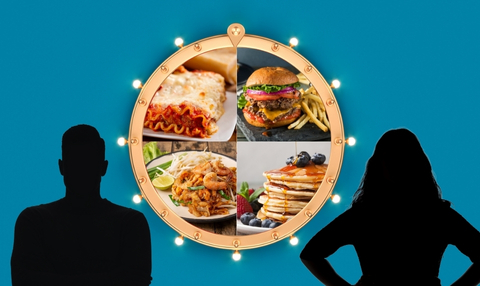
On nights when we’re not sure what to eat, sometimes we use this strategy to pick something! (Where did I learn it? I don’t remember, but it was probably a TikTok video.) One person selects five options that all sound okay to them, like “Pancakes and eggs, Five Guys, Thai food, rotisserie chicken from Market Basket, freezer lasagna.” The next person narrows it down to three options that sound acceptable to them: “Rotisserie chicken, pancakes and eggs, Five Guys.” Then the first person has the final pick from those three. “Let’s have pancakes and eggs.” Sometimes we add in an extra back and forth and do five, three, two, one. This structure helps us when it feels like somehow there are both too many options and not enough options. Sometimes we end up still in a stalemate, and we decide to each do our own thing for dinner. That is okay too.
3. Working with Professionals
My husband and I are privileged with good health insurance. We each work with anti-diet dietitians. As larger-bodied people, we have received a lot of judgement and criticism about our food choices over the course of our lives. For me specifically, this contributes to my challenges around eating. Anti-diet dietitians understand that eating in a way to control the shape of our bodies is not realistically supportive to our physical and mental health, and they operate from a shame-free, “all foods fit” perspective. Our dieticians help us identify our own needs in the context of the family. They’re able to help generate ideas for ways to get enough meals and snacks, to tune into our bodies and what they may be telling us, and help identify where we might need a supplement to meet a nutritional need, and they approach all of this in an affirming, nonjudgemental way. We each see individual therapists and we have a couples therapist. Our therapists help us utilize coping skills around the many emotions around eating and parenting, and unpack the effects of our histories with food and dieting. We work with providers to ensure we have access to medication around anxiety and ADHD. It’s quite the team.
Navigating eating as a neurodiverse couple can be really challenging. We don’t have it down yet, but we work through it with the guiding principles that we are a team, each of our needs matter, and that gentleness is more effective than shame.





Sign Up
Receive emails on events, autism info, and Autistic perspectives