

Finding Community in Autistic LGBTQ+ Support Groups
About the Authors
Taylor Eggers, MA, is a doctoral student in University of Massachusetts Boston’s Counseling Psychology Ph.D. program. His research focuses on LGBTQ+ mental health, the intersection of LGBTQ+/Neurodiverse experiences and mental health, and developing and evaluating interventions. His approach to research combines community collaboration, evidenced-based practice, and social-justice values.
Meredith Maroney, PhD (she/her/hers) is an Assistant Professor of Counselling Psychology at the University of Calgary, and will be moving to the University of Massachusetts Boston beginning in September 2023. She is a Licensed Psychologist in New York and Alberta. Dr. Maroney directs the Double Rainbow Lab, which is focused on LGBTQ mental health and the intersection of autism and LGBTQ+ identities. She is passionate about conducting social justice-oriented research in partnership with communities and individuals with lived experience.

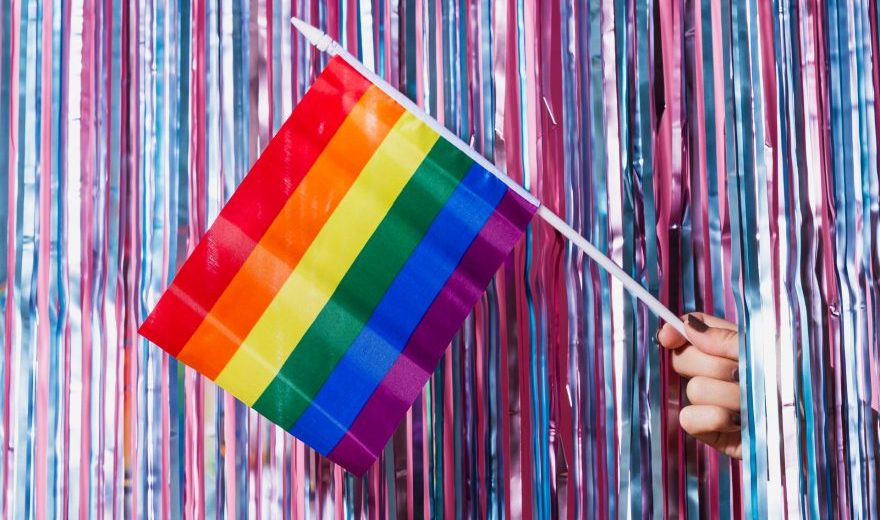
For Pride Month, we often think of coming together with queer community to celebrate through parades, marches, bar events, or protests. Images of rainbow flags, floats, exuberant music, and crowded dance floors may come to mind for some during June. This can be a positive space for those to experience authentic queer joy and connection, especially during a time where LGBTQ+ rights have been the focus of attacks (Trans Legislation Tracker, 2026). However, many of these spaces are not inclusive for people with disabilities as these spaces are not always built to be accommodating (Gurza, 2024). This adds a barrier to fostering queer community for those with disabilities.
When one or some identities are not included, people may feel they can’t bring their whole selves, even to spaces that should feel welcoming. This is a frequent experience faced by Autistic people who are also members of the LGBTQ community, which can occur in social settings, as well as more structured support services. This is an isolating experience to feel as though you don’t fit in with your community.
Few spaces are specifically designed to be inclusive of both Autistic and queer identities (Hillier et al., 2020). This is a barrier we often hear from Autistic LGBTQ+ people who participate in our research, and are looking for a space to share – spaces where their identities, interests, and experiences are shared or understood by others.
Prior research has shown that online groups can be a space where Autistic LGBTQ+ people can make connections with peers with multiple shared identities (Maroney & Horne, 2022; Hillier et al., 2020). In some cases, online communities may be the first place Autistic LGBTQ+ people come out as queer (Strauss et al., 2021) or start using their chosen name for the first time. Online groups may also be a space where Autistic LGBTQ+ attendees can provide support to peers who are approaching identity-related challenges they have already navigated (Cheung et al., 2018; Maroney & Horne, 2022), which may help them recognize ways they have grown.
Something we have heard a lot as researchers exploring the experiences of Autistic LGBTQ+ people in support groups is the uniquely welcoming environment in contrast to other spaces or even other support groups. There is a validating and eye-opening effect when hearing other Autistic LGBTQ+ individuals share their experiences. Feeling like someone just gets it and that they aren’t alone in their experience.
Hearing about these validating experiences prompted a recent collaboration between the Association for Autism and Neurodiversity (AANE) and researchers at UMass Boston. Together, we interviewed Autistic LGBTQ+ adults about their experiences, which will be discussed in a forthcoming manuscript. Broadly speaking, past participants shared that through the support group, they were able to form connections based on shared struggles and experiences, celebrate positive moments with others, gain insight into their own lives and identities, and feel less alone; all of this while being led by skilled facilitators, many of whom are also Autistic LGBTQ+ individuals
In our second phase of research, we recruited Autistic LGBTQ+ people who had not attended one of AANE’s Autistic LGBTQ support groups. Interested Autistic LGBTQ+ adults are still able to participate in the support group research study throughout the month of June 2026 (more information here). Findings from both phases of research will be shared back with AANE staff following analysis. Support groups will continue and a new cycle of closed groups begins in August. For more information on how to join an Autistic LGBTQ+ support group, follow this link.
References
Cheung, A. S., Ooi, O., Leemaqz, S., Cundill, P., Silberstein, N., Bretherton, I., … & Zajac, J. D. (2018). Sociodemographic and clinical characteristics of transgender adults in Australia. Transgender Health, 3(1), 229-238. https://doi.org/10.1089/trgh.2018.0019
Gurza, A. (2024, June 4). Pride isn’t just inaccessible for disabled people, it’s emotionally inaccessible too. LGBTQ Nation. Retrieved from https://www.lgbtqnation.com/2024/06/pride-isnt-just-inaccessible-for-disabled-people-its-emotionally-inaccessible-too/
Hillier, A., Gallop, N., Mendes, E., Tellez, D., Buckingham, A., Nizami, A., & O’Toole, D. (2020). LGBTQ+ and autism spectrum disorder: Experiences and challenges. International Journal of Transgenderism, 21(1), 98-110. https://dx.doi.org/10.1080%2F15532739.2019.1594484
Maroney, M. R. & Horne, S.G. (2022). “Tuned into a different channel”: Autistic transgender adults’ experiences of intersectional stigma. Journal of Counseling Psychology, 69(6), 761–774. https://doi.org/10.1037/cou0000639
Strauss, P., Cook, A., Watson, V., Winter, S., Whitehouse, A., Albrecht, N., … & Lin, A. (2021). Mental health difficulties among trans and gender diverse young people with an autism spectrum disorder (ASD): Findings from Trans Pathways. Journal of Psychiatric Research, 137, 360-367. https://doi.org/10.1016/j.jpsychires.2021.03.005
Trans Legislation Tracker. (2026). Tracking the rise of anti-trans bills in the U.S. Retrieved from https://translegislation.com/learn


Sign Up
Receive emails on events, autism info, and Autistic perspectives