

AANE Statement: We Refuse to Go Backwards–Autism, Truth, and the Fight Against Disinformation
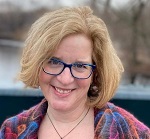
Brenda Dater, MSW, MPH
About the Author
Brenda Dater, MSW, MPH, is the executive director at AANE and the author of “Parenting Without Panic.” Brenda is a mom of three, and her eldest is an Autistic woman. Brenda has facilitated parent support groups for over 20 years and thoroughly enjoys creating an environment where parents can find the support, information, and the community they need.

Health and Human Services Secretary Robert F. Kennedy Jr. has deeply alarmed us with his comments that repeat long-debunked theories, stigmatize people, and misrepresent everything about autism.
Instead of amplifying disinformation, we should be focusing on what really matters: recognizing the value of every person and ensuring that Autistic people have the support and community they need to lead meaningful, connected lives.
Calling autism an “epidemic” reflects a fundamental misunderstanding of how autism is identified and diagnosed. An increase in diagnoses does not mean autism is dangerous.
It reflects decades of expanded awareness, broader diagnostic criteria, and improved access to services. It wasn’t until 1980 that the Diagnostic and Statistical Manual even included autism.
Since then, many people who would previously have gone undiagnosed or were misdiagnosed are now counted.
Kennedy’s comparison of current prevalence rates to those from the 1980s or earlier ignores this historical context. Autistic people have always been here. We are simply doing a better job of recognizing and supporting them.
Kennedy’s claim that Autistic individuals will “never hold a job, they’ll never play baseball, they’ll never write a poem, they’ll never go out on a date” is not only false—it is dehumanizing. It reflects a dangerous and ableist belief that a person’s worth depends on their productivity or conformity to neurotypical standards. At the Association for Autism and Neurodiversity (AANE), we support thousands of Autistic individuals with a wide range of support needs. Some hold jobs, write poetry, or run marathons—but these accomplishments are not what give a person value. Every Autistic person deserves dignity, respect, and the right to a meaningful life—regardless of whether they work, date, or achieve traditional milestones. Worth is not measured by output or independence. It is intrinsic.
Autistic people are not one dimensional. As often as we see people thrive, we also acknowledge the deep distress and anxiety that loneliness, isolation, under- and unemployment bring. These challenges are exacerbated by systems that do not offer understanding, inclusion, or accommodation. The effort it takes to find providers or services that are attuned to Autistic needs is often exhausting and requires persistence and patience. For example, studies estimate that 70–95% of Autistic individuals also experience mental health challenges, yet many give up after just one or two failed attempts to find a provider who also understands autism. Autistic individuals with high support needs often face long waitlists, underfunded programs, staffing shortages, and inconsistent quality of care. These are solvable problems, but they are not solved by calling autism a “tragedy.”
Kennedy’s claim that autism, “is a preventable disease. We know it’s environmental exposure. It has to be,” simply isn’t true. Decades of peer-reviewed scientific research show that genetics are the primary factor in autism. Studies published in major journals and, and reports from the National Institutes of Health, consistently find that, “Inherited genetic factors account for approximately 80% of the risk for autism…”
Kennedy acts like scientists have ignored environmental factors – but that’s not true. Researchers have spent decades studying them. What they’ve found is clear: genetics are by far the strongest factor in autism, not any one exposure or event.
We cannot let outdated thinking shape national policy. Our leaders must reject disinformation and center the voices and experiences of Autistic individuals and their families. At AANE, we will continue to stand in solidarity with the Autistic community, resisting harmful narratives and advocating for a world that values and uplifts Autistic voices. We should all want a future where every individual—regardless of neurology—is respected, supported, and empowered to thrive.


Sign Up
Receive emails on events, autism info, and Autistic perspectives