

Negotiating Rest in a World that Demands the Opposite

Mina Fonze
About the Author
Mina Fonze (she/her) is a late diagnosed Autistic self advocate with a focus on intersectionality. She has worked with AANE in IFS as an administrative coordinator, support group facilitator, and now senior manager. In her spare time she enjoys horror, pasta, being harassed by her cats, and rewatching episodes of Bob’s Burgers or The Twilight Zone for the umpteenth time.
Last weekend was a holiday. My sister came out to visit – one of my favorite (if not most favorite) people. I took the week off work to spend time with her to eat good food, watch funny YouTube videos, hang out with friends old and new, and spend an incredible day at the San Diego Zoo. We saw a baby giraffe less than a day old learning to follow its mother, heard the cackling song of a kookaburra, and saw two sloth bear cubs wrestling and bothering their elder (relatable sister experience). It was an absolutely fantastic time, and I would do it all again in a heartbeat, but when she left after her week-long stay, I barely felt human anymore.
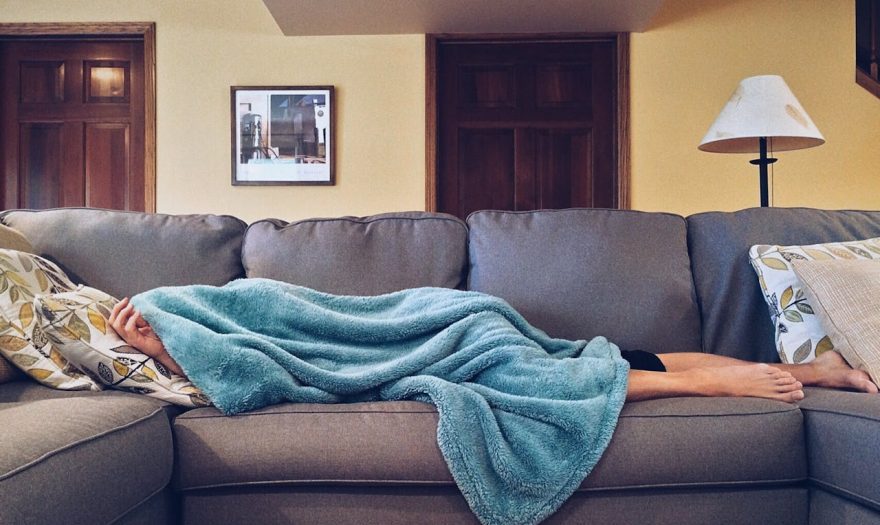
I slept nearly the entire day after she left, finally slogging to the living room around 4 PM with hardly a thought in my head and tears welling in the corners of my eyes. Everything felt too sharp, too loud, too hot. Having been in this state before, I knew I was on the path to Autistic burnout (if not dipping my feet in already), and it was beyond time to slow down or stop entirely for a few days to recalibrate.
In my day-to-day life, as best I can, rest and downtime are built in to prevent overwhelm from creeping in. Working from home allows me the autonomy and alone time I need during the week to dress in a way that isn’t overstimulating, eat on a schedule that works for my body, listen to what helps me stay regulated (or focused and motivated), and take cat snuggle breaks as necessary. I can avoid the harsh lighting and constant people-ing of the office that drove me to burnout so many times before. I keep my freezer stocked with safe foods (Trader Joe’s macaroni and cheese is a favorite), so on those days when planning, cooking and then finally eating feels too difficult, I have low effort foods a few microwave buttons away. I aim to have no more than one social engagement a week.
The constant demands of existence are exhausting enough without the impending political doom I now feel nearly constantly, the tiny tragedies of my own personal life, and the general ups and downs of being an adult in 2025. Though the impetus of this particular burnout was due to what amounts to “too much of a good thing” rather than the negative conditions that frequently lead us to such a despairing place, the results and solution are the same. I am exhausted, and I need to rest.
Making the Case for Rest
Perhaps the most difficult part of resting in this day and age is finding the compassion and space to do so. I know many of us relate to the feeling of “I’ve been sitting on the couch doing nothing for 3 days, and now I feel worse than before. What gives?!” In order to rest effectively, we need to feel good (and ultimately neutrally) about it. Shame is present in so many of our attempts to slow down or stop, transmuting a restorative practice into a conditioned spiral of self-hatred and guilt. In a time when leisure, pleasure, and rest are considered a “luxury,” how do we turn off that nagging voice inside of us that says we don’t deserve it?
You might have heard the adage “rest is an act of resistance.” The phrase is frequently attributed to queer Black poet and activist Audre Lorde. In her 1988 book, A Burst of Light, she writes, “I had to examine, in my dreams as well as in my immune-function tests, the devastating effects of overextension. Overextending myself is not stretching myself. I had to accept how difficult it is to monitor the difference. Necessary for me as cutting down on sugar. Crucial. Physically. Psychically. Caring for myself is not self-indulgence, it is self-preservation, and that is an act of political warfare.”
In our society where a person’s worth is derived from our “productivity,” I found that reframing that idea was most helpful to begin quieting the narrative telling me I’m lazy and wasting time. I can’t be useful to anyone if I’m not able to meaningfully participate in my own life. I can’t be useful to anyone if I can’t function at all. I can’t work to make my life and the world more joyous if I’m constantly exhausted, and if I’m being honest, I think that’s the point of the exhaustion-and-shame cycle’s insistence in the first place.
The Many Kinds of Rest
So what does “rest” really look like? Much like everything related to self-care, your perspective and needs may be different than mine. Sometimes rest for me looks like staring at a wall with my sunglasses on for a few hours or days. Sometimes it looks like reading the book currently serving as my portal to some other place or watching TV as a daily dose of escapism. Sometimes, rest looks like staying in bed until 4 PM, eating leftover pizza, and rewatching episodes of Portlandia for the tenth time with a cat on my lap and my husband silently coexisting next to me. This time I threw three hours of Solitaire on my phone and a sick day from work into the mix as well.
The reality is rest can really look like anything as long as it feels restorative to you. Some of us find this solace in nature or the library. Some of us love bed. Some of us (and oh how I envy you) find exercise or meditation restorative.
A recently published global study showed that internationally, Autistic adults are underrepresented in employment and more likely to be unemployed or underemployed than the general population, even when compared against differently disabled peers. Knowing I am not struggling alone, that it isn’t some personal failing on my part but caused by mechanisms doing the Autistic community a disservice as a whole, buoyed my confidence and resolve to reject those mechanisms and begin shaping a life for myself that worked better. Resting makes me less useful to the systems that put me in this position to begin with and more useful to myself and those in my community. Good news for me and those I love. Bad news for the capitalist machine.
The Accessibility of Rest
There is still however, an equally important follow-up question to ask ourselves: How do we find the time to rest when many of us don’t have the privilege of working from home (or at all), or a quiet and peaceful space to lay our head? When we’re working two jobs or are a single parent or caregiver to someone else? When the job market, disability benefits, and cost of living are in a tailspin? The answer to this is of course more complex in practice, but ultimately the same. It will look different for you than it does for me or anyone else. And you deserve that rest, however fleeting or bizarre it may look to someone living outside your own brain.
I recognize the immense amount of privilege I have to construct my life in some of these specific ways, while also knowing that regardless of your individual situation, repressing our needs and natural presentation can lead to dangerous outcomes. The space and time you have to rest may be very limited by the circumstances at play in your own life, but it feels worth asking, if not imperative to ask, if there is any wiggle room you can find to give your brain a break.
Can you sit in the car for 10 extra minutes when you get home from the grocery store? Can you go to bed 15 minutes earlier than you have been to give yourself some time to decompress? Can your morning cup of coffee linger a little longer than you’ve been allowing? Do you really need to go to that baby shower next week, or would it be better to spend that time at home? Can you take your lunch break outside and alone? Everyone at work is pushing you to pick up an extra shift, but would you lose your job or financial security if you said no? Is it worth it to safely disappoint others if it allows you the space to stop and take a breath and stare at the wall for an hour?
I can’t answer these questions for you, but what I can tell you is this: You deserve to feel safe inside your body and mind. You deserve to feel pleasure and luxury without “earning” it first. You deserve to use your PTO and sick days how you want when you can. You deserve joy however silly or strange it may look to someone else. You deserve rest.
And who knows? By prioritizing your own need for rest and relaxation, maybe you’re setting the stage for someone close to you to do the same. Laying a new foundation for our lives one deliberate brick at a time, until the world is built back up with more fortitude than before. Thoughtful and gentle and slow.




Sign Up
Receive emails on events, autism info, and Autistic perspectives