

The Real “Horror” Is the Lack of Understanding
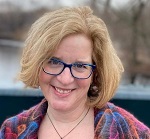
Brenda Dater, MSW, MPH
About the Author
Brenda Dater, MSW, MPH, is the executive director at AANE and the author of “Parenting Without Panic.” Brenda is a mom of three, and her eldest is an Autistic woman. Brenda has facilitated parent support groups for over 20 years and thoroughly enjoys creating an environment where parents can find the support, information, and the community they need.

My daughter has given me permission to share a glimpse into her daily life surrounding eating. Her food challenges go beyond sensory sensitivities that many Autistic individuals have because she also manages type 1 diabetes and celiac disease: two autoimmune conditions that frequently overlap. In fact, celiac occurs in about 6% of people with type 1 diabetes, compared with about 1% in the general population. Research also shows that Autistic people are more likely to experience co-occurring conditions, including diabetes and gastrointestinal disorders. For my daughter, this means every meal is an intricate balancing act: counting carbohydrates, calculating insulin doses, avoiding gluten completely, and then choosing only from foods her nervous system can tolerate.
To manage all of this, she has taught herself to cook from scratch. That way, she has more control over ingredients, textures, and safety. But cooking from scratch takes hours each day. The time and energy she needs to devote to her health is the time people without these challenges can devote to school, work, or rest. From the outside, this labor is invisible, but she has to work harder than most just to be able to eat safely, and she has to do it every single day. The toll is real, and it limits the energy she has for other parts of life.
Her story is not only personal; it reflects a larger reality. For many Autistic people, safe and tolerable food is not guaranteed. It requires extra time, energy, money, and access that schools, healthcare systems, and workplaces rarely account for.
But understand that while this is certainly a challenge, and to some degree connected to her being Autistic, my daughter’s autism is also integral to how she perceives and interacts with the world around her. It shapes her deep curiosity, her sense of justice, and the way she recognizes patterns that others overlook — especially in history, one of her greatest passions.
That’s why it is so painful to hear political leaders recently describe autism as a “horror show” and rush to judgement about its “cause.” This dehumanizing attitude focuses solely on the challenges, many of which could actually be better managed by increased understanding and support, and paints the entirety of autism as a “tragedy” and something to fear. I cannot imagine separating who my daughter is from her autism; it is woven into her personality, her perspective, and the unique ways she connects with people and ideas.
When attention is pulled toward fear-mongering, it takes oxygen away from the urgent work of providing services and accommodations. Every Autistic person in the world deserves the support they need and to be valued for who they are.


Sign Up
Receive emails on events, autism info, and Autistic perspectives