
What is autism?
If you are interested in learning more about autism or are questioning whether you or your loved one might be Autistic, this page is for you!
Many people reach out to AANE wondering, “Am I Autistic?” or “Does my child or partner have Asperger’s?” Although Autistic individuals may share common characteristics, each person is unique. Dr. Stephen M. Shore (a former AANE Board President) famously said, “When you meet one person with Asperger’s — you’ve met one person with Asperger’s.”
AANE started to retire the pathologizing terms, “syndrome” and “disorder” when referring to autism a long time ago and shifted to the term “Asperger’s Profile” to describe a range of neurological differences. Moving forward, AANE is using the term “Autistic” to refer to our community and views autism as a neurotype. If you or a loved one are part of our community, AANE is here for you!
Questions about autism or AANE’s services?
Schedule a call to speak with a member of AANE’s staff, or fill out a form to be contacted by email.
Language Disclaimer
AANE has made the decision to use the terms “autism” and “Autistic” in our communications moving forward. Many people continue to refer to themselves and their loved ones using the terms “Asperger’s,” “Aspie,” and other similar words. AANE respects each individual’s decision to use the language that best describes them and their loved ones.
Autism is a Neurotype
Simply put, a neurotype is the kind of brain you have. Neuro- meaning brain, and type- meaning what kind. All neurotypes are valid. No one neurotype or brain is better than another, and about 2% of the US population have an Autistic neurotype.
Neurotype — like race, gender, and sexuality — is a component of an individual’s identity. Discovering your neurotype can help you understand your strengths, support needs, and how you interpret and process the world around you.
Autism Through a Neurodiversity-Affirming Lens
The medical-model of disability describes autism as a disorder, emphasizing deficits. This model neglects the deep impact of ableism and stigma on Autistic individuals, as well as the many strengths associated with an Autistic neurotype.
In contrast to a medical-model lens, a neurodiversity-affirming lens recognizes that neurodiversity -– the diversity of human brains -– is normal, expected, and enriches our communities. A neurodiversity-affirming lens recognizes the many strengths associated with an Autistic neurotype while also appreciating that Autistic individuals face deep challenges and often have their needs denied and unmet due to systems, structures, and environments that were not set up with them in mind.
Understanding Your Unique Strengths and Support Needs
Each Autistic individual will have unique strengths and support needs as a result of their neurotype. What’s more, strengths and support needs change throughout the course of life and can be impacted depending on the environment. What may make someone feel supported, safe, and comfortable in one environment could be different in another environment. And this could change from day to day as well.
Some within our community may find they resonate with one or many of the following support needs.
| Domain | Support Need |
|---|---|
| Emotion Regulation | learning what coping strategies work as needs change and evolve throughout the lifespan, learning what triggers emotional overwhelm, how to cope with it when it happens, and how to set proactive boundaries to minimize emotional overwhelm |
| Executive Functioning | developing cognitive skills, such as effective planning, organizing, sequencing, shifting, and initiating |
| Relationships | building meaningful connections, supportive community, intimate relationships, and friendships |
| Self-acceptance | learning to accept and appreciate your neurotype in spite of ableism and stigma impacting our community and how we think about ourselves |
| Self-advocacy | learning strategies to advocate for your needs, though we are all interdependent and rely on those around us for support |
| Self-understanding | exploring your authentic self and discovering your true needs, wants, and aspirations after years of invalidation, masking, or feeling unsafe or unable to live authentically |
| Sensory Regulation | seeking out and/or reducing sensory input to regulate your sensory system |
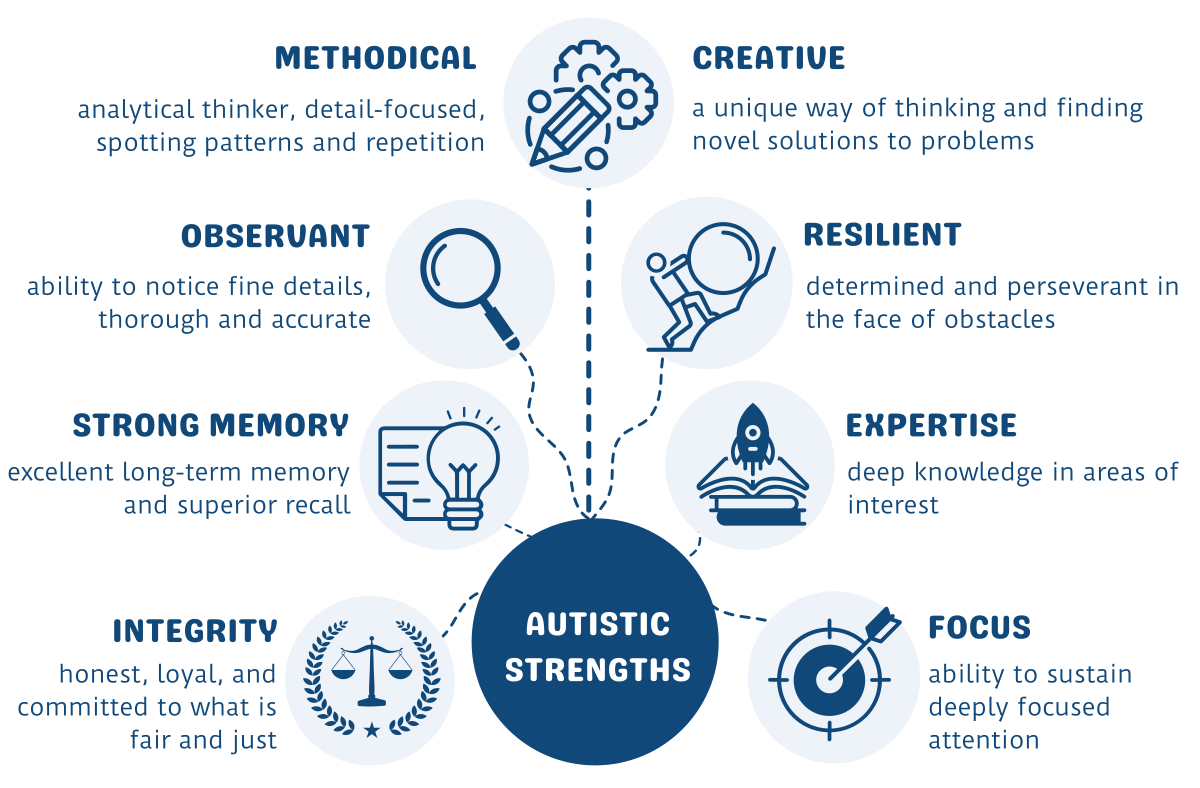
An Autistic neurotype is also responsible for the vast and expansive talents an individual may have, which oftentimes the medical-model approach neglects to acknowledge. AANE uses a neurodiversity-affirming lens and recognizes the deep, meaningful talents associated with an Autistic neurotype.
Some within our community may find that they resonate with one or many of the following strengths.
If you are interested in learning more about autism, AANE is here for you. Check out our FAQs, library, join one of our workshops, or connect with your peers about their experiences in a support group.
Related Services & Programs




Stay Current
Subscribe for AANE weekly emails, monthly news, updates, and more!